balitips.org; tips for bali authentic, non touristic sites: tips for finding temples, ricefields, ceremonies, photography tips. All tips for visiting Bali away from the touristic hotspots like Ubud, sanur, canggu, kuta
Bali Tips for an Authentic Journey
Escape the daily grind and discover the real Bali with BaliTips! This is your gateway to an unforgettable adventure, offering exclusive insights into the island’s hidden gems. Forget the bustling tourist traps – let us guide you to breathtaking temples, serene rice paddies, and vibrant local ceremonies. Our comprehensive tips will help you take spectacular photos and create lifelong memories. Explore Bali off the beaten track and discover the authentic culture and beauty that awaits you. Let BaliTips be your trusted travel companion, revealing the secrets of this magical island and transforming your trip from ordinary to extraordinary!
Do you also feel like not doing this when you’re on holiday?
Why you should choose Balitips.org?
– Focused on authentic travel in Bali
– Focus on places off the tourist routes
– Practical advice on transport, culture and safety
– No copy-pasting from standard travel blogs
My name is Lex Scholten, and I’ve been to Bali several times now, always looking for (and finding) places away from the tourist traps, like Sanur, Ubud, Kuta, Seminyak, and Canggu. Because, trust me, you really don’t want to be there anymore; those places have changed so much in recent years. These places in Bali are now overrun with tourists, so you can no longer experience the real Bali. And that’s a shame, because it’s a beautiful island, and the people outside the tourist areas
are very friendly and approachable, with a beautiful tradition that’s still kept alive there. And you can always be a part of it, thanks to their hospitality, as long as you observe the dress code and respect their customs.
But if you’ve read this far, you’re probably looking for places like this in Bali, away from the tourist traps.
And I’d love to help you get started. Here you’ll find tips and tricks, directions, and maps to places you might not necessarily visit on your own, but where you’ll experience the beauty of Bali.
Transport in Bali; the scooter
For the Balinese, the scooter is the ultimate way of transportation, and you’ll see the most bizarre transports. Children learn to ride them from a young age, and you’ll see them pull off the craziest antics. But let me start right away with the most important thing you need to realize if you’re going to Bali and planning to rent a scooter there to explore (which I definitely would if I were you):
The scooter you’ll rent there isn’t quite comparable to the scooters in our country, where the maximum displacement is 49 cc. A standard scooter in Bali is 110 or 125 cc, meaning a lightweight motorcycle. And you’ll notice! They accelerate quickly and can easily reach 100 km/h. However, the roads in Bali are absolutely not suitable for this (except for a few larger roads from north to south). On most roads, even going 30-40 km/h is a challenge. And don’t drive too close to the vehicle in front, as you absolutely want to see and avoid potholes. Make sure you have a phone holder (use Google Maps), and that it’s securely fastened. I once broke my Wi-Fi antenna due to the violent shaking of the holder. When you park your scooter somewhere, it’s perfectly normal to simply hang your helmet (mandatory!) over the mirror; no one will even think of taking it.
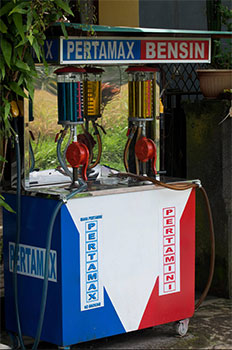
And when you fill her up, don’t fill her up at a regular gas station; buy your gas at a local pump. This way, you’ll help the local community. You might pay a few cents more, but gas is cheap (approx. €0,60/L).
Clothing, temples and ceremonies
Buy a sarong and make sure you bring it with you. An udeng is also handy, but in my experience, not always necessary, and you can often borrow one from, for example, the people you’re staying with at the guesthouse. If you want to participate in a ceremony, or just enter a temple, a sarong is absolutely essential.
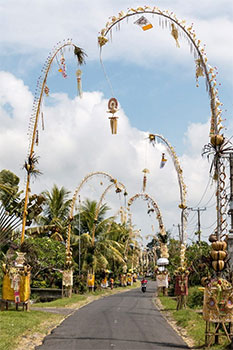
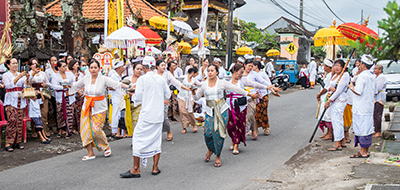
If you pass a temple, you might sometimes see penjor-poles, curved bamboo poles adorned with young coconut leaves and offerings, symbolizing Mount Agung, Bali’s holiest mountain. If you see penjor-poles on a street or near a temple, there’s a good chance a Galungan ceremony is being held there that day. Want to learn more? Download the comprehensive extensive Balitips.
If you really want to experience Bali, get off the main roads and find your way in the back roads. Use Google Maps for this (download the Bali map beforehand as a local map so you don’t need internet access there!). I always find it quite surprising to drive through small villages and soak up the atmosphere. It also increases your chances of passing a temple where a ceremony is taking place.
There are many different types of ceremonies; read more about them in the downloadable PDF with extensive Balitips. If you are invited to attend such a ceremony, always behave respectfully; after all, you are a guest.
You’ll soon notice people approaching you and wanting to chat. They’re always willing to explain the type of ceremony taking place and what it’s in honor of. Photography is generally not considered a problem at all, as long as you do it respectfully. Ask beforehand if taking photos is okay, and you’ll always receive a positive response. If you’re lucky, you’ll be allowed inside the temple complex (wearing a udeng) and will experience being treated as an equal (I’ve even been offered food and drinks during ceremonies several times).
Bali is called the island of a thousand temples, and that’s definitely an understatement. Of course, you can visit the well-known temples (and I would definitely visit a few if I were you), but there are also beauties that are much less well-known and therefore less crowded with tourists (download the extensive Balitips for more information). For example, everyone loves to visit Pura Tirta Empul, the temple with a source of holy water used by Balinese Hindus for ritual purification. Go there early in the morning to avoid the crowds. The same goes for Pura Bersakih, the “mother temple” of Bali, located on the slopes of Mount Agung. More tips, especially about less touristy temples, can be found in the downloadable extensive Balitips
Nature, rice fields, hidden places
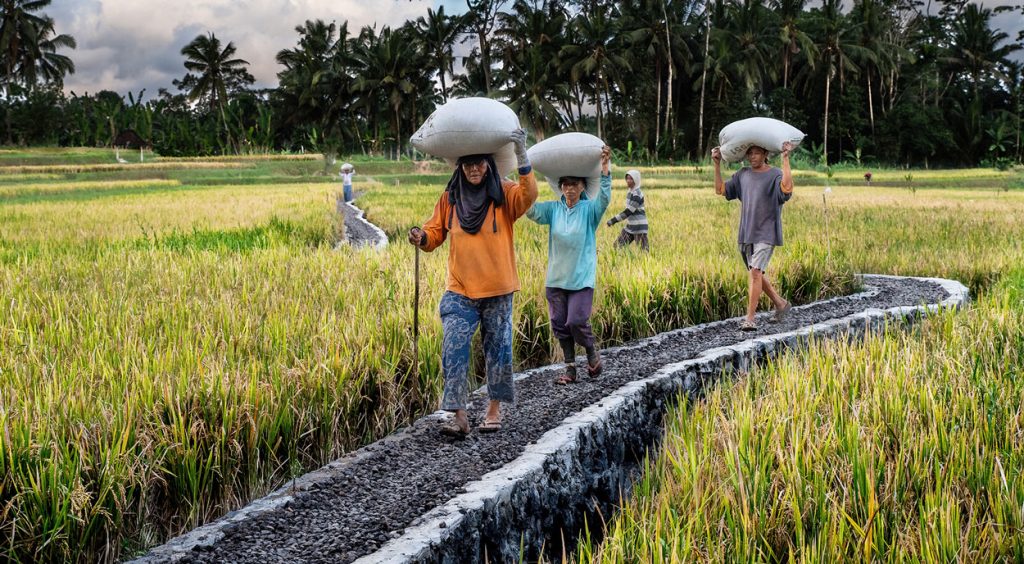
Bali is also known for its beautiful nature and rice paddies. Two of the larger rice paddy areas, Tegallalang and Jatiluwih, are World Heritage Sites. This has led to them becoming extremely touristy, although Jatiluwih, due to its more northerly location, is less of a problem than Tegallalang. But there are so many equally beautiful rice paddy areas in Bali, where tourists simply don’t come, and you can walk among the fields and watch the local farmers at work. And I’ve never experienced this as a nuisance. If you want to take photos, that’s no problem at all; sometimes you’ll be asked to pay a fee; in that case, give 20,000 IDR. More photography tips and the apps I use can be found in the downloadable extensive Balitips.
Culture
Find a local market, almost every larger town has one. Most markets open at 6:00 AM and close at 9:00 AM, so get there early. Wander around to see all the local fruits and vegetables, and sometimes you’ll be offered something to sample. Wander among the stalls and be amazed by the colors, smells, and flavors. This is much more enjoyable than wandering through the Ubud market, where everything is geared towards tourists.
There’s a “museum” displaying the most beautiful wood carvings you’ve ever seen. The craftsmanship on display is breathtaking. The founder and artist of all this carving is now old and bedridden, but his sons continue the tradition and have also learned the art from him. It also serves as a school dedicated to preserving authentic woodcarving. He is renowned both domestically and internationally, having been visited by leaders like Ronald Reagan, Vladimir Putin, and many other world leaders. Diagonally across from the museum is a shop where his sons also sell woodcarvings. If you’re looking for a front-row seat for a penny, you won’t find anything here. Instead, head to one of the tourist shops scattered around Ubud and Tegallalang. However, the difference in detail, quality, and finish is truly remarkable, making it worth a visit. The extensive Balitips explains where to find this museum and shop (which isn’t in Ubud).
In Kelusa, you’ll find a dance school where children learn traditional Balinese dances. This dance school was founded by an enthusiastic couple dedicated to preserving the Balinese tradition. Therefore, there’s no charge for children or parents to attend the lessons. The enthusiasm of both the teachers and the children is fantastic to witness. You’ll gain insight into the structure of the dance, and children of all ages participate.
Besides route descriptions to quiet areas, temples, and other sights, you’ll also find background information on rice cultivation, temples, ceremonies, dances, photography tips , and a few handy Bahasa words that will earn you that extra bit of appreciation from the locals.
Have you become curious about where you can find all this in Bali?
Then go to the order page now and order the extensive Balitips for only € 5.75 where all the information is stated!
00stemmen
Artikel waardering
0 Reacties
Oudste
Nieuwste
Inline feedbacks
Bekijk alle reacties
error: Content is protected !!
wpDiscuz
0
0
Zou graag je gedachten willen weten, laat een reactie achter.x


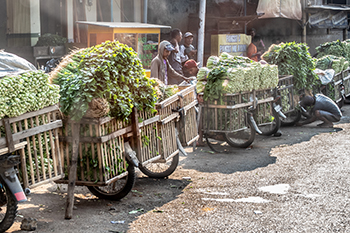 For the Balinese, the scooter is the ultimate way of transportation, and you’ll see the most bizarre transports. Children learn to ride them from a young age, and you’ll see them pull off the craziest antics.
 A standard scooter in Bali is 110 or 125 cc, meaning a lightweight motorcycle. And you’ll notice! They accelerate quickly and can easily reach 100 km/h. However, the roads in Bali are absolutely not suitable for this (except for a few larger roads from north to south). On most roads, even going 30-40 km/h is a challenge. And don’t drive too close to the vehicle in front, as you absolutely want to see and avoid potholes. Make sure you have a phone holder (use Google Maps), and that it’s securely fastened. I once broke my Wi-Fi antenna due to the violent shaking of the holder. When you park your scooter somewhere, it’s perfectly normal to simply hang your helmet (mandatory!) over the mirror; no one will even think of taking it.
And when you fill her up, don’t fill her up at a regular gas station; buy your gas at a local pump. This way, you’ll help the local community. You might pay a few cents more, but gas is cheap (approx. €0,60/L).
A standard scooter in Bali is 110 or 125 cc, meaning a lightweight motorcycle. And you’ll notice! They accelerate quickly and can easily reach 100 km/h. However, the roads in Bali are absolutely not suitable for this (except for a few larger roads from north to south). On most roads, even going 30-40 km/h is a challenge. And don’t drive too close to the vehicle in front, as you absolutely want to see and avoid potholes. Make sure you have a phone holder (use Google Maps), and that it’s securely fastened. I once broke my Wi-Fi antenna due to the violent shaking of the holder. When you park your scooter somewhere, it’s perfectly normal to simply hang your helmet (mandatory!) over the mirror; no one will even think of taking it.
And when you fill her up, don’t fill her up at a regular gas station; buy your gas at a local pump. This way, you’ll help the local community. You might pay a few cents more, but gas is cheap (approx. €0,60/L).
 Buy a sarong and make sure you bring it with you. An udeng is also handy, but in my experience, not always necessary, and you can often borrow one from, for example, the people you’re staying with at the guesthouse. If you want to participate in a ceremony, or just enter a temple, a sarong is absolutely essential.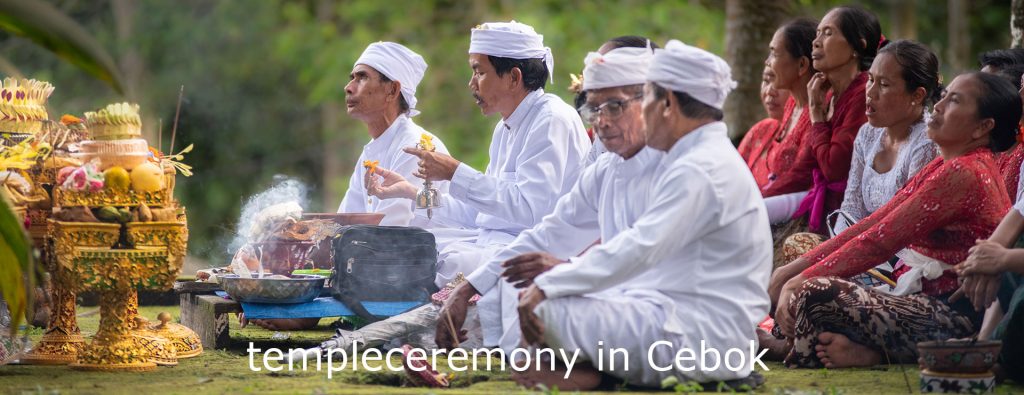
 You’ll soon notice people approaching you and wanting to chat. They’re always willing to explain the type of ceremony taking place and what it’s in honor of. Photography is generally not considered a problem at all, as long as you do it respectfully. Ask beforehand if taking photos is okay, and you’ll always receive a positive response. If you’re lucky, you’ll be allowed inside the temple complex (wearing a udeng) and will experience being treated as an equal (I’ve even been offered food and drinks during ceremonies several times).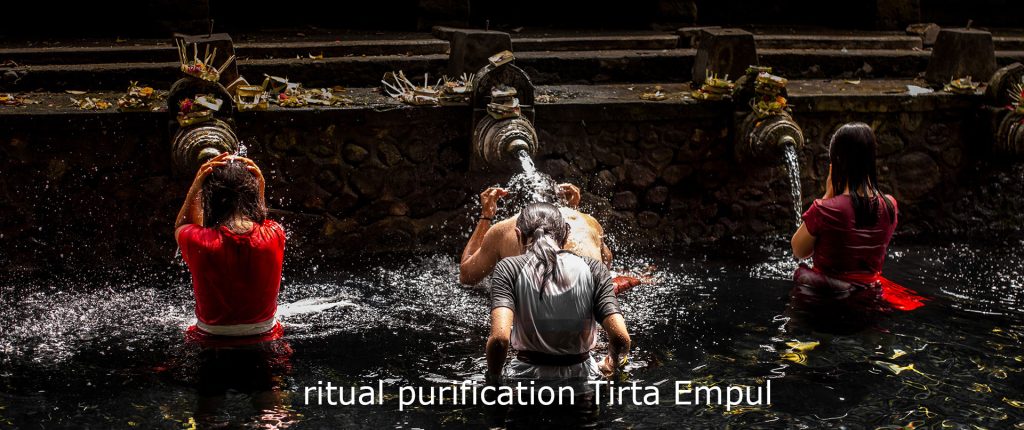
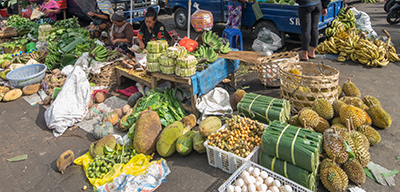 Most markets open at 6:00 AM and close at 9:00 AM, so get there early. Wander around to see all the local fruits and vegetables, and sometimes you’ll be offered something to sample. Wander among the stalls and be amazed by the colors, smells, and flavors. This is much more enjoyable than wandering through the Ubud market, where everything is geared towards tourists.
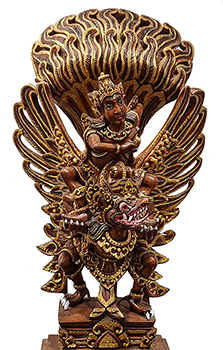 There’s a “museum” displaying the most beautiful wood carvings you’ve ever seen. The craftsmanship on display is breathtaking. The founder and artist of all this carving is now old and bedridden, but his sons continue the tradition and have also learned the art from him.
 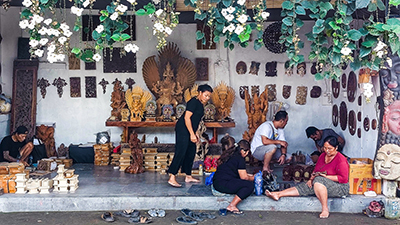 It also serves as a school dedicated to preserving authentic woodcarving. He is renowned both domestically and internationally, having been visited by leaders like Ronald Reagan, Vladimir Putin, and many other world leaders. Diagonally across from the museum is a shop where his sons also sell woodcarvings. If you’re looking for a front-row seat for a penny, you won’t find anything here. Instead, head to one of the tourist shops scattered around Ubud and Tegallalang. However, the difference in detail, quality, and finish is truly remarkable, making it worth a visit. The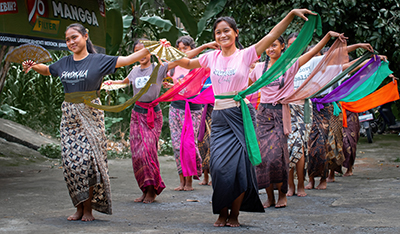
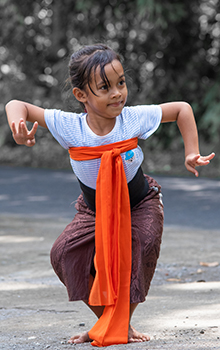 In Kelusa, you’ll find a dance school where children learn traditional Balinese dances. This dance school was founded by an enthusiastic couple dedicated to preserving the Balinese tradition. Therefore, there’s no charge for children or parents to attend the lessons. The enthusiasm of both the teachers and the children is fantastic to witness. You’ll gain insight into the structure of the dance, and children of all ages participate.